


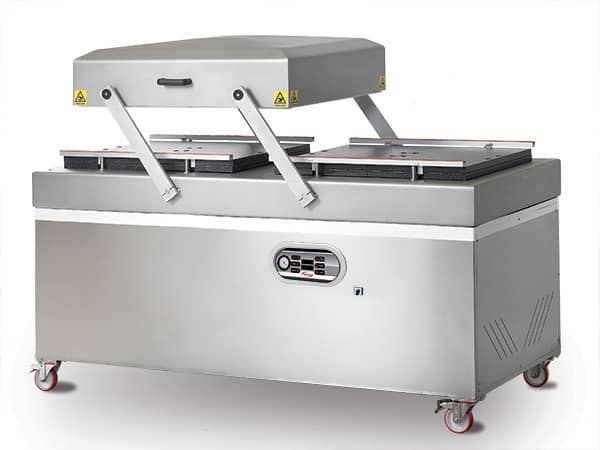
Order product
Oxygen alters the chemical composition of products: the oxidation process changes their structure, color, and aroma, while destroying vitamins and minerals. Aerobic bacteria and mold spores present in the air penetrate the product, and their rapid reproduction leads to spoilage.
Fresh vegetables, fruits, herbs, and rennet cheeses have metabolic activity and require gas exchange for proper storage. Therefore, vacuum packaging is not suitable for them as they need gas-permeable packaging.
In contrast, ready meals, semi-finished products, meat, poultry, fish, dairy products, soups, and other perishable items do not need gas exchange. They are placed in barrier bags where the air is removed. In the absence of oxygen, products do not oxidize, and harmful microflora stops developing.
While standard vacuuming extends shelf life by 2–2.5 times, the remaining 0.02% of oxygen can still allow bacteria to grow. This is where Modified Atmosphere Packaging (MAP) comes in, using inert gases to displace 100% of oxygen, extending shelf life by up to 5 times.
Approximate Shelf Life in Vacuum Packaging:
| Product | Regular Storage | Vacuum Packaging |
| Refrigerated (t= 5 ± 2 °C): | ||
| Raw Beef | 3-4 days | 8-9 days |
| Veal, Pork, Lamb, Poultry | 2-3 days | 6-9 days |
| Fresh Fish | 1-2 days | 4-5 days |
| Sausages (whole) | 7-15 days | 25-40 days |
| Sausages (sliced) | 4-6 days | 20-25 days |
| Soft Cheese (fresh) | 5-7 days | 14-20 days |
| Hard Cheese | 15-20 days | 25-60 days |
| Vegetables | 1-3 days | 7-10 days |
| Fruits | 5-7 days | 14-20 days |
| Cooked Foods (t= 5 ± 2 °C): | ||
| Soups | 2-3 days | 8-10 days |
| Pasta and Rice | 2-3 days | 6-8 days |
| Cooked Meat | 3-5 days | 10-15 days |
| Frozen (t= -18 ± 2 °C): | ||
| Meat | 4-6 months | 15-20 months |
| Fish | 3-4 months | 10-12 months |
| Fruits and Vegetables | 8-10 months | 18-24 months |
| Dry Foods (t= 25 ± 2 °C): | ||
| Bread | 1-2 days | 12 months |
| Biscuits/Cookies | 10 days | 12 months |
| Pasta, Rice, Grains | 5-6 months | 12 months |
| Flour | 4-5 months | 12 months |
| Coffee (ground) | 2-3 months | 12 months |
| Tea | 5-6 months | 12 months |
| Powdered Milk | 1-2 months | 12 months |
Additional Benefits:
-
Profitability: Significant savings on packaging costs compared to glass or tin, and up to 50% storage space savings.
-
Lightweight and Compact: The package weight is negligible compared to the product weight.
-
Reliability: High-quality barrier bags are puncture-resistant and can withstand high external pressure.